Gorilla Trekking in Mgahinga National Park - Best Time Tips Wildlife and Conservation
- 21 hours ago
- 5 min read
Mgahinga National Park is small, steep, and unforgettable. It protects part of the Virunga Mountains in southwestern Uganda, where mountain gorillas move through bamboo, montane forest, and misty slopes.
This is one of the most rewarding places for Gorilla Trekking in Uganda. The park feels wild from the first step.
Best times to visit for gorilla trekking
The best times for gorilla trekking in Mgahinga are during the drier seasons:
June to September
December to February
Trails are usually firmer during these months. Visibility can be better too, especially on higher slopes. That makes walking easier and improves the chance of clear mountain views.
Rain can still fall at any time. Mgahinga sits in a highland forest, so weather changes fast. A sunny morning can turn wet before lunch.
The wetter months can still be good. The forest looks lush, and there may be fewer visitors. The trade-off is mud. Trails get slippery, and trekking can take more effort.
For the best balance, choose a dry-season date, book permits early, and build one extra day into your trip if your schedule allows.
What to expect during the trek
A gorilla trek starts early. Trekkers meet at the park office for a briefing from Uganda Wildlife Authority rangers. They explain the rules, group behavior, and the plan for the day.
Mgahinga is known for the Nyakagezi gorilla group, a habituated family that has made the park famous. Rangers track gorilla movements each day. The route changes with the gorillas, not with visitor convenience.
Expect:
Uneven forest trails
Steep climbs in places
Mud, roots, and thick vegetation
Cool air in the morning
Sudden rain, even in dry months
The trek can take a few hours. Some days are shorter. Other days demand patience and stamina. Once the gorillas are found, visitors usually spend a limited time with them, often about one hour, under ranger guidance.
That hour is powerful. A silverback may sit still and feed. Young gorillas may tumble through leaves. Adults may strip stems, groom, or rest in silence.
Stay quiet. Keep distance. Follow the ranger’s instructions every time.

How to prepare for Mgahinga Gorilla Trekking
Good preparation makes the trek safer and more enjoyable. The forest decides the pace. Your gear should match that reality.
Pack these essentials:
Waterproof hiking boots
Choose boots with strong grip. Break them in before the trip.
Long pants and a long-sleeved shirt
These help protect against nettles, insects, and scratches.
Rain jacket or poncho
Rain is common in mountain forest.
Daypack with water and snacks
Bring enough for several hours on the trail.
Gardening gloves or trekking gloves
They help when grabbing branches or pushing through vegetation.
Camera with no flash
Flash photography is not allowed around gorillas.
Face mask if required by current park rules
Gorillas can catch human illnesses. Follow the latest health guidance.
Hire a porter if one is available. Porters carry bags and help on difficult slopes. The fee also supports local livelihoods around the park.
Safety is simple but serious:
Keep the required distance from gorillas.
Do not trek if you feel sick.
Do not eat or drink near the gorillas.
Keep your voice low.
Do not run if a gorilla moves close.
Crouch if a ranger tells you to do so.
Follow every instruction from the guides.
Gorillas are powerful wild animals. Respect keeps the encounter safe.
Wildlife and scenery beyond the gorillas
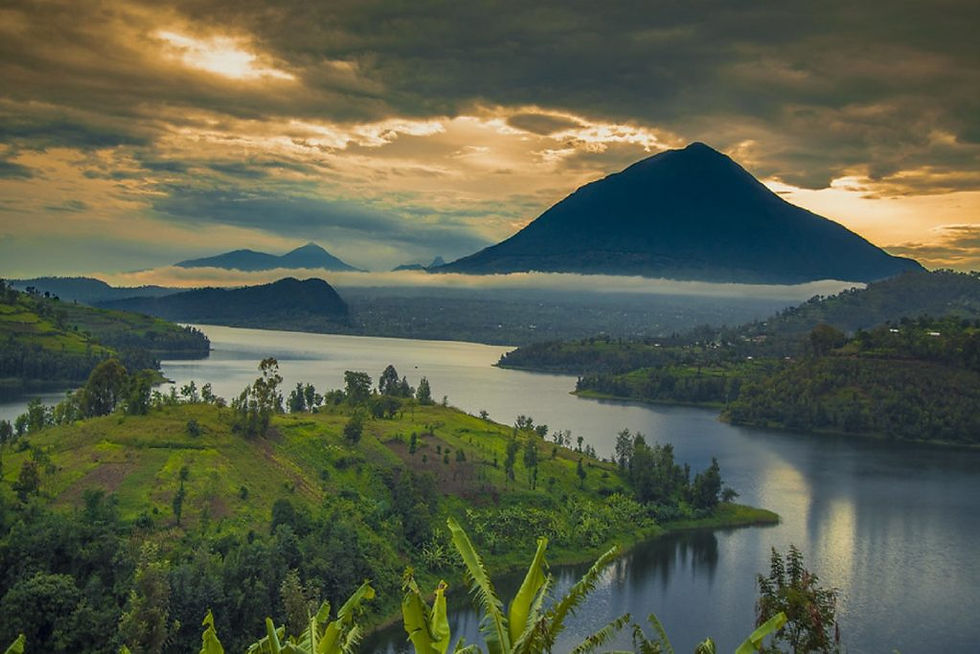
Mgahinga is more than one famous primate. The park sits where Uganda meets the wider Virunga ecosystem. Its scenery is dramatic for such a compact area.
Three volcanoes dominate the skyline:
Mount Gahinga
Mount Muhabura
Mount Sabyinyo
The slopes hold bamboo forest, montane woodland, and high-altitude plants. On clear days, the views stretch across ridges, valleys, and volcanic peaks.
Wildlife in the park includes golden monkeys, forest birds, duikers, bushbucks, and many smaller forest species. Golden monkey tracking is another major activity here. These quick, bright-coated primates live in bamboo zones and move fast through the canopy.
Birdlife is strong too. The Albertine Rift region has many range-restricted species, which makes Mgahinga attractive for birders.
The scenery changes with altitude. Lower trails can feel enclosed and green. Higher slopes open to moss, lichen, giant vegetation, and cold mountain air.

Why conservation matters here
Mountain gorillas survive only in a small part of East and Central Africa. Their future depends on protected habitat, careful tourism, veterinary care, anti-poaching work, and support from nearby communities.
Gorilla tourism helps fund conservation. Permit revenue supports park management, ranger patrols, monitoring, and community projects. It also gives local communities a reason to protect wildlife rather than view it as a burden.
Conservation in Mgahinga also protects water sources, forests, birds, monkeys, and the volcanic ecosystem. Gorillas draw attention, but the whole park benefits.
Responsible tourism matters. It reduces stress on gorillas and lowers the risk of disease. It also helps ensure that future visitors can have the same rare experience.
Choose licensed operators. Respect permit rules. Listen to rangers. Keep the forest clean. Small actions matter when the population is vulnerable.

Practical tips before you go
Book your gorilla permit before arranging minor trip details. Permits are limited, and high-season dates can sell out.
Stay near Kisoro or at lodges close to the park gate. This reduces early-morning travel stress.
Train before the trip if you can. You do not need to be an athlete, but strong legs help. Practice walking hills or stairs while carrying a small backpack.
Keep your expectations flexible. Wildlife does not follow a schedule. The trek may be short, long, dry, muddy, quiet, or intense. That is part of the adventure.
A good Mgahinga Gorilla Trekking day is not only about the sighting. It is the climb, the forest smell, the ranger’s knowledge, and the sudden silence when gorillas appear.
FAQ
Is gorilla trekking in Mgahinga difficult?
It can be moderate to challenging. The trail may be steep, muddy, and uneven. Fitness helps, but rangers set a manageable pace.
How long does the gorilla trek take?
The trek can take a few hours, depending on where the gorillas are that day. The actual time with the gorillas is limited and controlled by park rules.
Can children go gorilla trekking in Mgahinga?
Gorilla trekking has a minimum age set by wildlife authorities. Check the current Uganda Wildlife Authority rules before booking.
What should I wear for the trek?
Wear hiking boots, long pants, a long-sleeved top, and a rain jacket. Neutral colors work well in the forest.
Is Mgahinga worth visiting if I also visit Bwindi?
Yes. Mgahinga has a different feel. It combines gorilla trekking, golden monkeys, volcanic scenery, and a quieter mountain atmosphere.
Final takeaway
Mgahinga National Park delivers a raw and focused gorilla trekking experience. Go in the drier months if you want easier trails. Prepare for rain anyway. Walk with respect, listen to the rangers, and treat the forest as a living home.
The reward is rare: a close encounter with mountain gorillas in one of Uganda’s most dramatic wild places.